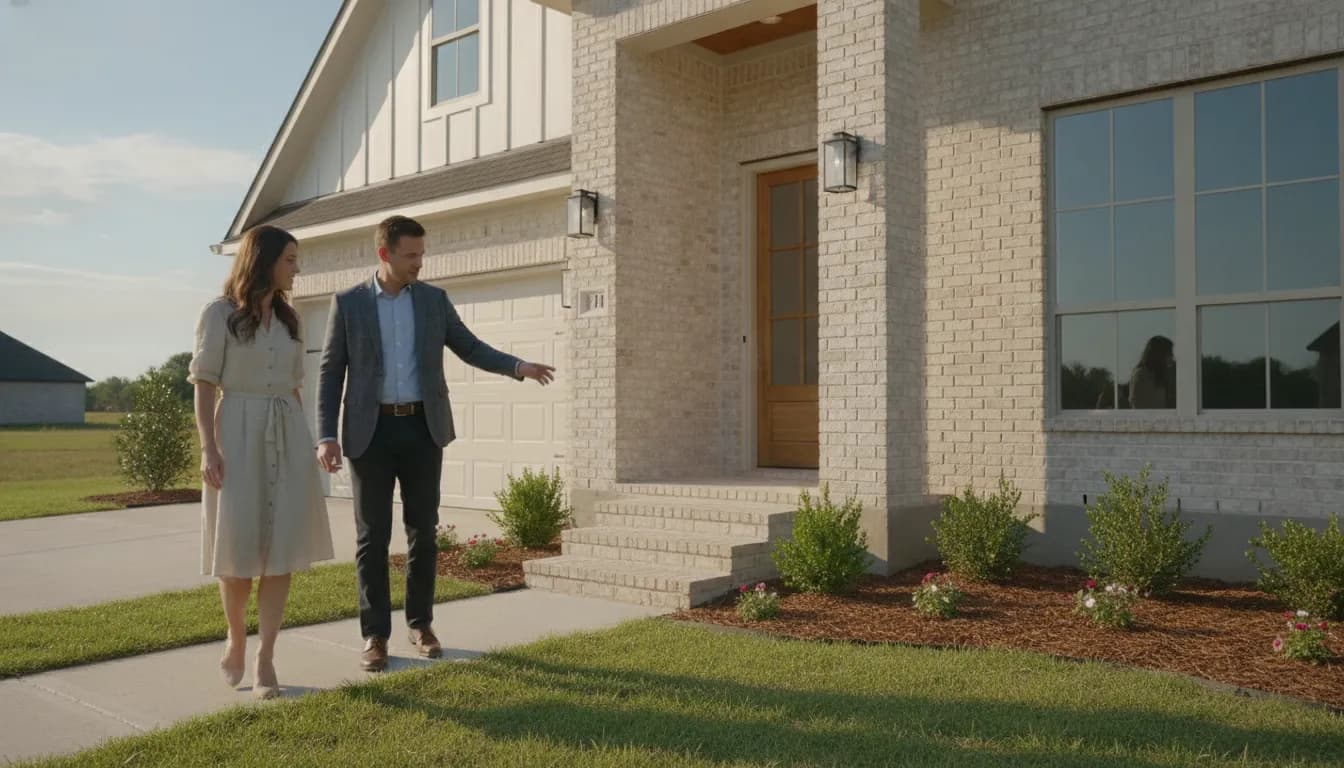
A home can look finished while important questions about warranty coverage, drainage, systems, and loan costs remain unanswered. That is especially true when you are comparing completed new construction in Bossier City on a tight moving timeline. Treat the final walkthrough as the start of your review, not the end.
Talk with L&N Associates about your Bossier City home search and organize the questions you want answered before you commit.
When evaluating move-in ready new homes bossier city, confirm what "move-in ready" includes, review the builder warranty, schedule an independent inspection. Test the finishes and major systems, verify neighborhood infrastructure, and ask your lender to explain the complete cash-to-close picture.
A practical checklist helps separate visible finish work from the condition, documents, services, and terms that can affect your first months of ownership. Start by defining what readiness should mean for this specific home, then work through each question with the builder, inspector, lender, and relevant local providers.
How Bossier City Buyers Should Evaluate Move-In Ready New Homes
A move-in ready home should be finished enough to occupy, but buyers still need to verify its condition, systems, documents, and surroundings before committing. Walk through the property, review what the builder includes, ask questions about unresolved work, and arrange independent professional advice where appropriate. Finished does not automatically mean fully evaluated.
Start by defining what "move-in ready" means for this particular home. Ask whether all contracted work is complete, whether any punch-list items remain, and which appliances, fixtures, landscaping, or exterior features are included. Request the written specifications and compare them with what you can see. A home can look polished while still requiring clarification about unfinished details, operating systems, or documents that will matter after closing.
- Confirm what the builder says is complete and what remains on the punch list.
- Review the written specifications, warranty, manuals, and completion documents.
- Schedule independent inspection and lender reviews within the applicable deadlines.
- Test visible finishes, systems, drainage, storage, and exterior features.
- Verify neighborhood services, restrictions, infrastructure, and total ownership costs.
Separate visible completion from overall readiness. During your walkthrough, test what you reasonably can: open doors and windows, examine walls and ceilings. Look at storage, and note the condition of the yard, garage, gutters, and exterior. Pay attention to practical questions, such as whether the floor plan works for your daily routines and whether the home has enough usable storage. For heating and cooling, windows, doors, and siding, ask the appropriate builder or qualified professional how the systems and materials are covered and maintained.
Then verify the parts a casual walkthrough cannot settle. Ask for the builder's warranty documents, completion records, manuals, and procedures for reporting defects. Consider an independent inspection rather than treating the final finish as proof that every component is sound. An inspector can evaluate physical condition and identify items that may need repair or replacement. An appraisal serves a different purpose and does not replace an inspection.
This focused checklist complements, rather than repeats, our Bossier City home-buying guide. That broader resource covers the overall purchase decision. Here, the emphasis is narrower: evaluating a completed new-construction home before you rely on the phrase "move-in ready."
What Should You Ask About the Builder Warranty?
Ask for the complete builder warranty before you commit, then confirm what it covers. How long each item is covered, what it excludes, and how to submit a claim. A builder warranty is different from a paid home warranty service contract. The written terms, not a sales explanation, should guide your expectations.
Start with the coverage categories
Ask whether the warranty covers workmanship and permanent materials, such as concrete floors, plumbing, electrical work, windows, and HVAC components. Coverage can vary by category and duration. As examples, the Federal Trade Commission explains that workmanship and materials on many components commonly expire after the first year, while HVAC, plumbing, and electrical coverage is generally described as lasting two years. Some builders offer longer protection for major structural defects, but never assume those timelines apply to a particular home.
- Which systems, finishes, and structural elements are included?
- When does coverage begin, and when does it end for each category?
- Are repairs handled by the builder, a manufacturer, or another contractor?
- What documentation, inspections, or maintenance records are required?
Check exclusions and the claim process
Read the exclusions as carefully as the coverage. Builder warranties commonly exclude household appliances and may exclude small cracks in brick, tile, cement, or drywall. They may also exclude out-of-pocket costs, such as temporary housing while a repair is underway. Ask who decides whether a problem is covered, how quickly the builder must respond, and whether you are responsible for service fees or access arrangements.
Keep the warranty, closing documents, manuals, photographs, inspection report, and every message in one file. Submit repair requests in writing, even if an urgent hotline is available, and describe the location, symptoms, date noticed, and requested response. Ask whether the agreement requires mediation or arbitration for a disputed claim, and note any deadlines for notice or appeal. A clear paper trail can make follow-up easier without assuming that every defect will qualify.
Why Schedule an Independent Inspection on a New Home?
Even if a home looks finished and ready for move-in, an independent inspection can help you understand its condition before you commit financially. A qualified inspector may identify repairs, assess major systems and finishes, and give you information to discuss with the builder or seller. An inspection is a buyer due-diligence choice, not a claim that every new home has a defect or that an inspection is legally required.
New construction can still have incomplete work, installation issues, or details that are easy to miss during a quick walkthrough. Fresh paint and unused fixtures do not tell you how systems perform together. An independent professional can look beyond appearance and provide an unbiased assessment of the home's physical condition. HUD explains that an inspection can help estimate the remaining useful life of major systems, equipment, structure, and finishes, while identifying items that may need repair or replacement. Read HUD's home inspection guidance for the distinction between inspection and other parts of the purchase process.
When should you schedule it?
Ask about the inspection timeline as soon as you are considering a specific home, then coordinate the inspection with your purchase agreement and any applicable due-diligence deadlines. The exact timing depends on your contract and transaction, so confirm those dates with the appropriate professionals. If the home is not fully complete, ask whether a follow-up inspection will be useful before closing. Keep the inspection independent from the builder's own quality-control walkthrough, since each serves a different purpose.
What should you ask the inspector for?
Before hiring anyone, ask about qualifications, the inspection scope, and what the report will include. HUD recommends asking a prospective inspector for their Standards of Practice or a sample report. You can also ask whether the inspection covers the structure, major systems, equipment, and visible finishes, and whether limitations or inaccessible areas will be documented. A clear report should help you distinguish routine observations from issues that warrant further evaluation by a specialist.
How do you use the report?
Review the findings promptly with your representative and ask the builder or seller for written responses, supporting documentation, or proposed repairs where appropriate. Prioritize safety, water intrusion, structural concerns, and system performance rather than treating every cosmetic note as an emergency. The report can inform your negotiations and repair plan, but it does not replace your own contract review or professional legal advice.
Finally, do not confuse an appraisal with an inspection. HUD notes that an appraisal estimates a home's value for the lender and does not replace a home inspection. One addresses value for financing; the other helps you understand condition before making a financial commitment.
Which Finishes and Systems Need a Close Look?
Look beyond fresh paint and unused appliances. A move-in-ready home deserves a room-by-room review of comfort, operation, drainage, storage, finishes, and visible defects. Use the walkthrough to document questions for the builder and inspector. HUD's checklist is an evaluation aid, not a guarantee that every item is complete or defect-free.
Start with the systems that affect daily comfort and future expense:
- HVAC: Ask whether heating and cooling equipment operates as expected, where filters are located, and what documentation is provided. Note unusual noise, weak airflow, or temperature differences between rooms. Heating and cooling costs are also part of a practical property evaluation.
- Plumbing: Run faucets, test drains, flush toilets, and look below sinks for leaks or unfinished connections. Ask how shutoff valves and water-heater controls are accessed.
- Electrical: Test accessible switches and outlets, check that fixtures operate, and ask the inspector to evaluate the panel, grounding, and safety devices. Do not remove covers or attempt repairs yourself.
- Windows and doors: Open, close, and lock each one. Look for damaged seals, sticking, gaps, incomplete screens, or poor weather-stripping. Confirm that doors latch and that exterior thresholds are finished.
- Siding, roof, and gutters: Walk the exterior for damaged siding, incomplete trim, roof concerns, and gutters or downspouts that direct water away from the home. HUD's checklist specifically calls out exterior condition, roof condition, gutters, downspouts, energy efficiency, and storm windows.
- Drainage and yard: Note standing water, low areas, unfinished grading, or water flowing toward the foundation. Ask which drainage features are complete and what remains under the site plan or builder scope.
Inside, compare the floor plan with how you will live in it. Check wall and ceiling finishes, flooring, cabinets, counters, appliance operation, closets, attic or garage storage, and the practicality of the rooms. HUD includes interior wall condition and closet or storage space among comparison points. Record each incomplete item with its location and a photograph.
End with a written punch list. Separate cosmetic corrections from safety, water, structural, or system concerns, and ask who will correct each item and when. A qualified inspector should address conditions beyond a buyer's visual review.
How Do You Check the Neighborhood and Infrastructure?
Check a neighborhood at different times of day, then verify services, restrictions, and travel patterns with the appropriate local sources. Look beyond the finished home: traffic, noise, safety, parking, zoning, utilities, emergency services, commute, schools, and nearby amenities can shape daily life and long-term value.
Start with an on-site visit during a typical morning, afternoon, and evening. Compare traffic flow, road access, noise from major routes or nearby businesses, lighting, and the condition of neighboring properties. HUD's home-buying checklist specifically recommends considering nearby-property condition, traffic, noise, and safety or security when evaluating a neighborhood: review the HUD checklist for the broader set of questions.
Confirm rules, access, and essential services
Ask who maintains the streets, drainage features, sidewalks, and common areas. Confirm where guests can park, whether vehicles or trailers face restrictions, and whether zoning or neighborhood covenants limit additions, fences, rentals, or other future plans. Request the governing documents rather than relying on a verbal summary.
Also verify how fire protection, police coverage, and garbage service are handled. Do not assume a new development has the same arrangements as an older neighborhood. Ask the builder, association, municipality, or service provider which party confirms each detail and whether any fees or responsibilities belong to the homeowner.
Test the location against your routine
Map the commute at the times you actually travel. Check routes to work, schools, parks, grocery stores, restaurants, medical care, and other regular destinations. L&N's neighborhood analysis may include schools, parks, restaurants, commute times, zoning, sale-price history, and submarket context, so use that conversation to identify questions worth verifying independently.
East Bossier can be discussed as a customer-context new-development corridor, not as a promise of current availability. For rural or small-town comparisons, the property and infrastructure checks provide a useful parallel for thinking through utilities and access. Record what you observe, what a qualified source confirms, and what remains uncertain before you commit.
What Financing Questions Belong on Your Checklist?
Before committing to a move-in-ready home, ask the lender to document what you may qualify for. What funds you will need at closing, and which ongoing costs belong in your budget. Confirm the loan, appraisal, insurance, taxes, association charges, rate-lock terms, incentives, and assistance options in writing.
Start with preapproval, not just a rough payment estimate. Ask what documents support the preapproval, how long it remains useful, and what could change before closing. Then ask for a clear explanation of cash to close, including the down payment, lender charges, prepaid items, and other transaction costs. L&N buyer support includes budget planning and discussion of down payment and closing costs, while the lender remains responsible for loan terms and approval.
| Question | Why it matters | Who confirms it |
|---|---|---|
| What loan types fit my situation? | Loan requirements, documentation, and tradeoffs can differ. | Lender |
| How much cash should I plan for at closing? | Helps you compare the full upfront commitment with your available funds. | Lender and closing provider |
| What happens if the appraisal differs from the contract? | Clarifies a potential financing issue before deadlines arrive. | Lender and real estate professionals |
| What will insurance, property taxes, HOA charges, and other recurring costs be? | Shows whether the ongoing budget remains comfortable after move-in. | Lender, insurer, tax authority, and association |
| When can my rate be locked, and for how long? | Helps you understand timing and what the lender's lock terms mean. | Lender |
| Are incentives or assistance programs available, and do I qualify? | Identifies options without assuming eligibility or guaranteed assistance. | Lender and program administrator |
Ask separately whether any builder or seller incentive has conditions, deadlines, or an effect on the loan structure. Do not rely on a verbal description. If you are comparing FHA or VA financing, ask a qualified lender to explain current requirements and whether the property and your circumstances fit them. L&N can help connect buyers with lender partners and discuss navigation of down-payment assistance programs, but only the lender or program administrator can confirm eligibility.
For broader context on contract language, review these Louisiana financing and purchase terms, then obtain professional legal advice for questions about your specific agreement.
Want help organizing your Bossier City home-buying questions? Contact L&N Associates for buyer guidance before you make a commitment.
Frequently Asked Questions
Should I get an independent inspection on a move-in-ready new home?
Yes. A new home can still have items that need correction, and an independent inspector can evaluate major systems, finishes, and overall condition before you make a financial commitment. An appraisal estimates value for a lender, but it does not replace a home inspection. HUD explains the distinction.
What should I confirm about the builder warranty?
Ask for the written warranty, covered components, coverage periods, exclusions, repair process, and claim deadlines. Builder warranties generally provide limited coverage for specified workmanship, materials, windows, HVAC, plumbing, and electrical systems, but appliances and some minor cracks may be excluded. Submit concerns in writing and keep copies of every response. The FTC recommends reviewing coverage and documenting repair requests.
How can I check whether the neighborhood fits my daily life?
Visit at different times and assess traffic, noise, nearby property condition, parking, drainage, and personal comfort. Then confirm zoning, covenants, garbage service, fire protection, and other services with the appropriate local sources. A finished home does not guarantee that the surrounding infrastructure or neighborhood conditions match your needs.
Which financing questions should I ask before making an offer?
Ask your lender to explain the estimated cash needed at closing, loan options, appraisal process. Insurance and tax estimates, any association costs, rate-lock terms, and how incentives would affect the transaction. Have your budget and down payment assumptions reviewed before relying on a builder or lender estimate, and request each important term in writing.
Get Started With Your Bossier City Home Search
A completed new home can still raise questions about inspections, warranties, neighborhood conditions, and next steps. L&N Associates can help you organize those questions and evaluate how a move-in-ready property fits your search. To talk with L&N Associates about your Bossier City home search and buyer due diligence, contact us.