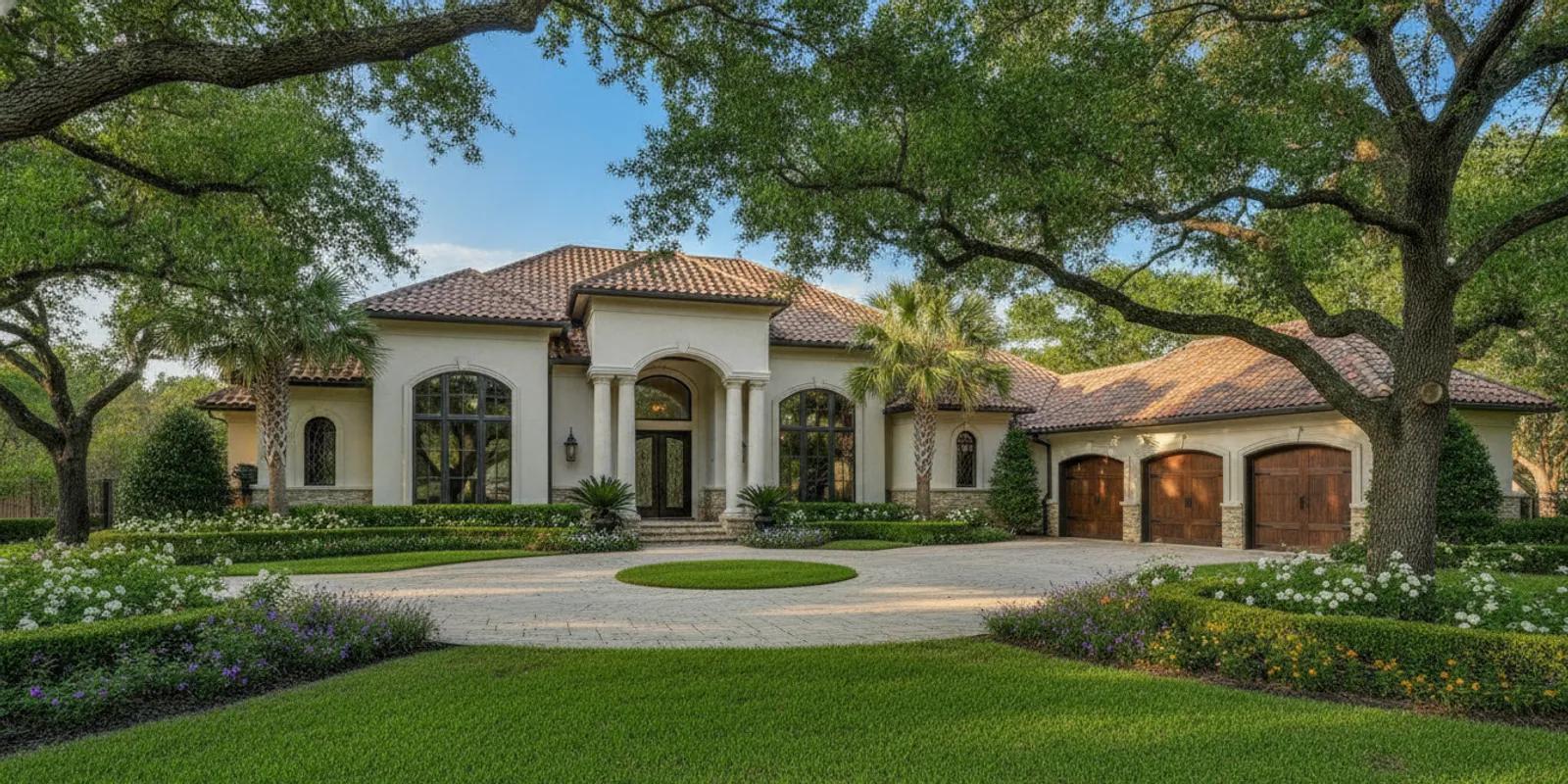
The average price of luxury homes in Bossier City can sound like a simple benchmark, but it is meaningful only when you know which properties and dates were counted. Without a current, luxury-specific sample and a stated method, a precise figure can mislead more than it helps. This guide explains how to define the comparison and judge what a particular home is worth to you.
What does an average price of luxury homes in Bossier City actually tell you?
An average is the arithmetic mean of the prices in a chosen group. It does not describe every home in that group, and it is not automatically a reliable estimate for the next home you consider. To interpret one, you need its source, date range, geographic boundary, property criteria, and whether it measures asking prices or completed sales.
The important question is not simply whether a number exists. It is whether the homes counted resemble the property you want to buy. A citywide figure can combine modest homes with large custom properties. A luxury-only figure can still mix locations, sizes, condition, and property types that do not match your search.
No dated luxury-only average or active inventory count is established in the information available for this article. Rather than present an unsupported number as current, use the method below to request a properly defined comparison. For broader area context, the Bossier Parish property guide and Bossier City location overview can help distinguish geography; neither should be treated as a current luxury price report.
How should you define the local luxury segment?
There is no single price threshold that makes a home a luxury property in every market or for every buyer. Set a working definition for the comparison instead of treating the label as a universal category. Record the threshold and features you chose, then apply them consistently to each listing and sale you review.
A useful definition might combine a price band with property characteristics that matter to your search. These could include a custom layout, a larger or more private lot, distinctive finish work, extensive outdoor space, or specialized rooms. The point is not to claim that any one feature makes a home luxurious; it is to describe the group you want to compare.
- Set the geography: Decide whether you mean Bossier City proper, a defined neighborhood or map area, or a broader Bossier Parish search.
- Choose property types: Keep detached homes separate from condos, townhomes, land, or multifamily properties when their prices cannot be compared meaningfully.
- Choose the price boundary: State your working range and recognize that it is a search filter, not an official classification.
- Name the distinguishing features: Note the approximate size, lot, condition, finish level, and amenities you expect in the group.
- Fix the time window: Use a stated period for closed sales and record the date on which active listings were checked.
Changing the definition halfway through the search makes the resulting average difficult to interpret. For example, adding acreage homes to a group of in-town properties can change the typical lot and price profile. If the criteria need to change because few comparable homes exist, make a separate group and label the difference instead of silently combining everything.
Why can two luxury homes have very different prices?
Price reflects a bundle of characteristics, not a luxury label. Location, condition, usable layout, lot, workmanship, and the buyer's priorities can all affect how one property compares with another. The right exercise is to identify the differences and look for evidence in similar closed sales, rather than assume that one visible feature justifies a particular premium.
Location and setting. Two houses with similar interior area may offer different surroundings, access, privacy, street conditions, or daily convenience. A Bossier City-wide summary can obscure these differences. Set a map boundary that is relevant to the candidate home and note when a comparable sale is outside it.
Usable space and layout. Total square footage does not tell you how well the rooms work for your needs. Consider bedroom and bathroom placement, storage, guest space, work areas, accessibility, and how the living areas connect. A room that adds to the stated area may have limited value to a buyer if it does not serve a practical purpose.
Condition and quality of work. Updated finishes can look similar in listing photos while differing in materials, installation, age, and documentation. Ask what was changed, when the work was completed, and whether permits or records are available when relevant. Treat unverified descriptions as questions to resolve, not established facts.
Land and outdoor features. Lot size, privacy, drainage observations, landscaping, pool or other amenities can change both appeal and upkeep. Consider the cost and time needed to maintain them. An amenity may be a genuine benefit for one buyer and an ongoing obligation for another.
Scarcity and comparability. A highly customized or unusual home may have fewer close comparisons. A thin sample makes any average less representative. In that situation, review the nearest available sales, describe the differences, and be clear about what the evidence cannot establish.
A location overview is not the same as a property valuation. If you are also considering homes in neighboring communities, use the Benton and Haughton comparison as geographic context, then return to property-specific evidence rather than carrying a price assumption from one area to another.
Which price measures should you compare?
Asking prices describe what sellers are requesting, while closed-sale prices record completed transactions. Neither measure alone answers what a particular home is worth to you. Put the measure, date, and sample criteria beside every number, and avoid treating a median or average from a broad market as a luxury-home benchmark.
| Measure | What it can help you understand | What to check before relying on it |
|---|---|---|
| Active asking prices | Current seller expectations for properties still being offered | Search date, boundary, matching criteria, listing status, and price history |
| Closed-sale prices | Prices in completed transactions during a stated period | Closing dates, location, condition, property similarities, and transaction context |
| Average sale price | The arithmetic mean for the transactions included | Sample size and whether unusually high or low sales distort the result |
| Median sale price | The midpoint when included sale prices are ordered | Whether the sample actually represents the luxury segment you defined |
| Price per square foot | A rough way to screen properties with broadly similar characteristics | Layout, lot, condition, finish, location, and how area was measured |
Suppose a report gives an average based on a few completed sales, while your shortlist includes a custom home with a larger lot and extensive renovation. The reported mean may be accurate for its own sample yet still have little predictive value for that home. Ask for the underlying comparable properties, not just the summary figure.
Also separate list price from negotiated price. A current listing can show a seller's initial position, but it is not proof of the eventual sale price. For a home that has been listed for a while or changed price, ask for the dated history and compare it with relevant closed sales rather than guessing why the seller adjusted the price.
How can you review comparable properties fairly?
A fair comparison begins with a small, transparent set of criteria and a written record. Start with nearby, recent sales when available, then explain each difference that could matter. A comparable sale is evidence to weigh, not an identical substitute or a guarantee of what another buyer will pay.
- Write down your subject home's basics. Record its location, type, approximate size, lot, condition, layout, and features that matter to you.
- Request the search boundaries. Ask where the comparison was drawn, which property types were included, and what dates the sales cover.
- Review the actual properties. For each sale, note whether its setting, condition, usable space, lot, and improvements resemble the home under consideration.
- Flag large differences. Separate a nearby home needing substantial work from a renovated property, or an in-town lot from a much larger parcel.
- Check the evidence date. Keep track of when the information was collected and refresh it if the search or market period changes.
- Keep a range, not false precision. Use the evidence to understand a plausible comparison range, and state uncertainties instead of presenting a finely precise estimate.
A simple worksheet can keep this process grounded:
| Property | Similarities to your candidate | Material differences | Questions still open |
|---|---|---|---|
| Comparable A | Record nearby location, approximate size, or similar layout if verified | Note condition, lot, or amenity differences | Confirm sale date and details of improvements |
| Comparable B | Record the features that genuinely match | Identify any difference that may limit its usefulness | Check records or source for missing facts |
| Comparable C | Use a third relevant example if available | Do not hide a broader geography or different property type | Ask whether the data set is large enough to be informative |
Do not force a comparison simply to fill a table. If no close sales are available, say that the evidence is limited and broaden the search only with a clear reason. A more distant sale might help with context, but it should not be presented as if it were equivalent to an immediate-area match.
For questions about an appraisal's purpose and process, the guide to the Bossier City appraisal process for buyers may be useful. An appraisal, a pricing opinion, and a buyer's personal assessment each serve different roles; ask which question a particular analysis is intended to answer.
What should you verify beyond the list price?
Before deciding what to offer, look at the full ownership picture as well as comparable sales. A home with a compelling asking price can still require near-term repairs or carry costs that change your budget. Get property-specific documents and estimates from the appropriate people; broad averages cannot replace them.
- Condition and repairs: Review available disclosures and arrange appropriate inspections. Use a qualified specialist when an inspection identifies an issue that needs further evaluation. The home inspection checklist for Bossier City buyers can help you prepare questions and keep observations organized.
- Taxes and insurance: Request current information for the specific address and obtain an insurance estimate based on the home and coverage you need. Do not assume a nearby property's bill or premium will match.
- Utilities and upkeep: Ask for recent utility information when available. Consider ordinary maintenance along with care for landscaping, pools, outbuildings, or other features you intend to keep.
- Association responsibilities: Confirm whether dues, shared expenses, or restrictions apply and review the governing information that is available.
- Renovation records: Ask about the age and scope of major work and request documentation where it exists. A finish that appears new does not, by itself, establish the condition of the systems behind it.
- Financing and closing: Request a current estimate from your lender and closing professionals. The Louisiana closing-cost guide discusses seller-side costs, which should not be mistaken for a buyer's cost estimate.
- Contract terms: Understand the deadlines, contingencies, included items, and other terms before signing. Ask the relevant professionals to explain questions within their roles.
Buying with a longer-term investment plan adds another layer. Estimate likely operating costs and repairs, test assumptions conservatively, and do not assume a high-end property will perform well as a rental simply because of its price or finish. The investment property analysis checklist addresses that separate decision.
How should you use a luxury-price estimate when making an offer?
Treat an estimate as one input, not a command to buy or walk away. Your decision should combine comparable sales, the home's condition, the costs you can verify, your priorities, and your financial limits. If the evidence is incomplete, identify what would change your decision and resolve those questions before you rely on a single figure.
Consider a hypothetical buyer comparing two homes. One is closer to the preferred area and has a layout that works, but has older systems and fewer recent updates. The other has newer finishes and an amenity the buyer may rarely use. A raw average or price-per-foot comparison cannot decide between them. The buyer can instead list essential features, request cost estimates for the first home's known needs, and assess whether the second home's premium is supported by similar sales and personal value.
This example has no dollar amounts because none are needed to show the method. In an actual search, fill in verified sale prices, dates, and property facts. If a cost or feature is unknown, mark it as unknown rather than substituting a market-wide guess. That distinction helps prevent an attractive headline number from concealing a major open question.
Before making an offer, write down your decision points:
- Which verified sales are the closest matches, and why?
- What key differences make those sales imperfect comparisons?
- What condition, repair, tax, insurance, or ownership costs remain uncertain?
- Which home features are must-haves, and which are optional?
- What evidence would make you revise your preferred price or terms?
- Who can provide the missing information, and by when?
For help thinking through a purchase or sale in the area, review the Shreveport-Bossier buying and selling options. Use an informed local conversation to clarify the comparison you want; keep the final choice tied to your own circumstances and verified property information.
What should buyers ask before relying on a luxury average?
A trustworthy price summary should make its limits visible. Ask for the data source, the date it was collected, the boundaries and criteria used, and the actual sale or listing measure reported. If the person sharing a figure cannot explain those details, use it as a prompt for further questions rather than a decisive benchmark.
There is one broader consumer consideration when comparing homes: evaluate the property and transaction on their relevant facts, not on assumptions about people. The U.S. Department of Housing and Urban Development provides information about federal fair housing protections at its official website. For an individual concern, seek guidance from an appropriate professional or agency.
- What exact area is included, and does it match the home I am considering?
- Are the figures based on active asking prices, pending transactions, or closed sales?
- What are the start and end dates, and when was the information last updated?
- How many properties qualify, and what criteria define the luxury segment?
- Can I review the underlying comparable properties and their differences?
- Which details are verified, and which are seller descriptions or estimates?
Talk through your property criteria
Frequently asked questions
These answers focus on how to interpret a price figure rather than offering an unsupported citywide estimate. The useful next step is to request a dated, clearly bounded comparison that reflects the kind of home you actually want to buy.
Is there a published average price for luxury homes in Bossier City?
This guide does not verify a current luxury-only average. Before relying on a published figure, check its source, date, geography, property criteria, sample, and whether it reports asking or closed prices. A general citywide average may include homes outside the segment you mean.
Is a median more useful than an average?
It depends on the question and the sample. An average can shift when a small number of transactions have unusually high or low prices; a median gives the middle observation in an ordered group. Neither is representative if the included properties do not match your search.
Can price per square foot tell me what a luxury home should cost?
It can be a rough screening measure for broadly similar properties, but it does not account for lot, condition, layout, location, or the quality and usefulness of improvements. Compare it alongside relevant closed sales and property-specific details, not as a stand-alone valuation.
What if there are too few comparable sales?
Ask for the closest relevant examples and a clear explanation of how each differs. The comparison may need a wider time or geographic range, but those limits should be stated. When the evidence is thin, avoid turning a small sample into a precise claim about the whole luxury market.
What is the next step if a home's price seems unsupported?
Review its price history, compare the most relevant closed sales, inspect its condition, and estimate ownership costs. Ask what evidence supports the asking price and which uncertainties remain. Then decide whether to negotiate, seek more information, or continue your search.
A useful luxury-home price estimate is specific about its sample and honest about uncertainty. Compare properties with consistent criteria, verify the details that affect cost, and base your decision on current evidence for the home in front of you.