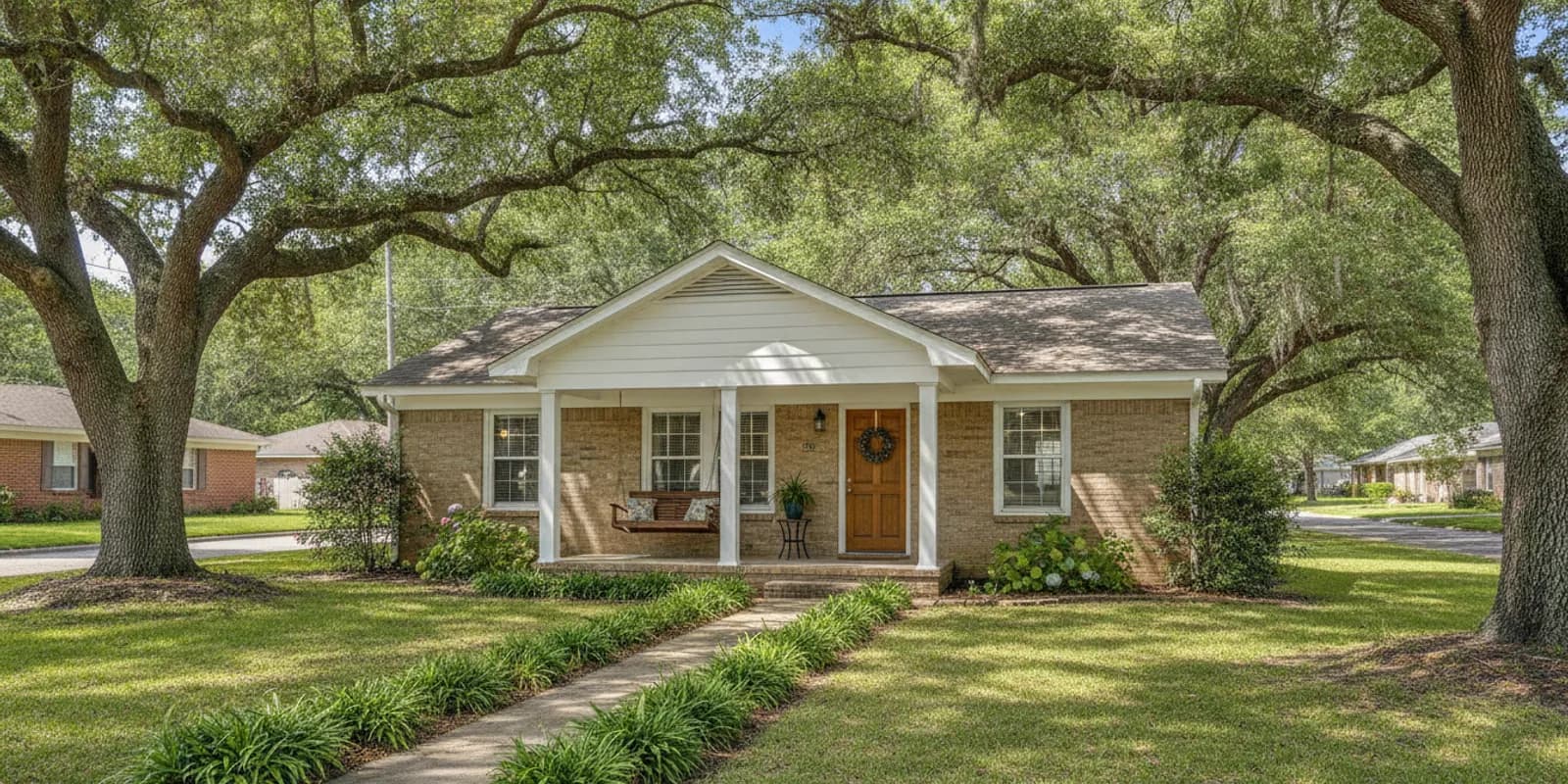
Choosing among Bossier City homes for retirees involves more than finding a comfortable floor plan. The right fit depends on how you want to live day to day, which tasks you want to handle yourself, and what costs and services you need to verify. Use this guide to compare homes and neighborhoods in practical terms, then confirm property-specific details before you commit.
Talk through your home-buying options
What should retirees prioritize when comparing Bossier City homes?
Start with daily function, not age labels. List the activities a home must support now, such as entering without difficult steps, cooking comfortably, hosting family, or keeping up with outdoor work. Then consider what could become inconvenient later. Compare each property against the same written list so attractive finishes or a low asking price do not distract from practical needs.
Retirement does not mean every buyer has the same mobility, schedule, budget, or plans. One person may want a compact home near errands; another may value a workshop, guest space, or a larger yard. There is no universal “retirement home” feature checklist. Use personal priorities, not assumptions about age, to decide what matters.
- Must-haves: features that support daily comfort, access, budget, and household needs.
- Preferences: useful extras you would enjoy but could live without.
- Trade-offs: features that require a compromise, such as more space in exchange for more upkeep.
Write down the reason for each must-have. “Few steps at the entrance” is easier to assess than “accessible.” “A second bedroom for visiting family” is more specific than “room to grow.” Share that list with your real estate professional, and revisit it after tours to see whether your priorities are changing.
How can you assess accessibility during a home tour?
Walk the route you would use every day, from the parking area to the rooms you use most. Notice stairs, thresholds, narrow turns, lighting, floor transitions, and the location of bathrooms and laundry. A listing description cannot establish whether a particular layout will work for your needs, so inspect in person and seek qualified advice for any modifications that matter.
At the entrance, check the number and height of steps, the condition and slope of the walkway, the door opening, and whether there is a stable place to pause. Inside, look at how easily you can move between the bedroom, bathroom, kitchen, and living area. Pay attention to rugs, loose flooring, tight hallways, and abrupt level changes. These observations are prompts for evaluation, not a medical or safety assessment.
In the kitchen, consider counter height, storage location, lighting, appliance access, and whether you can work without repeatedly reaching or bending. In the bathroom, inspect the available floor area, door swing, tub or shower entry, and ventilation. Do not assume that an attractive bathroom can be adapted at low cost; ask a qualified contractor to assess the actual space if changes are important to your decision.
For a multi-level home, consider whether the rooms you depend on are on the level you enter. If they are not, think carefully about the stairs and whether that arrangement fits your present and anticipated needs. When comparing homes, note the specific feature that concerns you and arrange a second visit or professional evaluation rather than relying on a quick impression.
Which home layout may mean less day-to-day maintenance?
Maintenance depends on the property’s condition, systems, lot, and your own capacity—not just square footage. A smaller house can still require substantial repairs, while a larger home may be manageable if its systems and outdoor areas are in good condition. Ask what tasks the property will require and price them realistically before deciding that one layout is easier to keep.
Compare the age and observed condition of the roof, heating and cooling equipment, plumbing, electrical components, windows, and major appliances. Ask for available service records, warranties, permits, and repair information, and have the home inspected. An inspection is not a guarantee against future costs, but it can identify issues that warrant follow-up or specialist review.
Outdoor work matters too. Check the size and slope of the yard, drainage, trees near the home, fencing, exterior surfaces, and any detached structures. Ask who is responsible for each task if an association or shared arrangement is involved; verify the governing documents, fees, and rules rather than assuming exterior work is included.
| Home feature or option | Potential advantage | Questions to investigate |
|---|---|---|
| Compact home or smaller lot | May involve fewer rooms or less yard to maintain. | Are the roof, systems, and surfaces in sound condition? What work is due? |
| Single-level layout | Keeps commonly used rooms on one floor. | Are entrances, thresholds, bathroom access, and circulation suitable for you? |
| Multi-level layout | May separate living, guest, or storage areas. | Are essential rooms on the entry level? How do the stairs feel in daily use? |
| Home with shared exterior upkeep | Some exterior tasks may be managed under an association arrangement. | What do fees cover? What rules, reserves, or owner responsibilities apply? |
This is a comparison framework, not a ranking. Homes vary, and any potential savings in time or upkeep need to be weighed against purchase price, fees, condition, and the work you may need to hire out. For a closer look at local listing and purchase considerations, see the Bossier City home-buyer guide.
How should you think about healthcare access?
Check the specific care, providers, and travel routes that matter to your household. A home’s distance from a facility on a map does not show whether a provider accepts your plan, has availability, or offers the service you need. Make direct calls to verify those details, and try the route at the times you expect to travel.
Before you choose a location, write down the types of care you use or want nearby. That might include a primary care provider, a specialist, a pharmacy, rehabilitation, or other services relevant to you. Confirm whether your current providers are taking patients and whether they accept your insurance. If changing plans or providers would affect your decision, verify the details with the insurer and the provider rather than relying on informal estimates.
Test more than one route where practical. Note the actual drive time at a typical appointment hour, parking and entrance arrangements, and whether the trip feels manageable. A map estimate is only a planning aid; traffic, construction, appointment schedules, and individual needs can change the experience. Do not treat proximity as a promise about response times or medical outcomes.
For broader community questions, the City of Bossier City Community Development page describes the department’s role in assessing community needs and developing programs. Check the city’s current information directly, and confirm eligibility and availability for any program that may be relevant to you.
What everyday conveniences should you check nearby?
Map the errands you actually make and visit the area yourself. Look at grocery shopping, pharmacies, banking, places of worship, recreation, and the routes you use to see family or friends. Then assess whether the distance, traffic, parking, and available transportation fit your routine rather than judging a neighborhood by a single nearby landmark.
Make a short list of regular trips, including how often you make them and whether you drive, ride with someone, or use another option. Check the route from each home at a realistic time. If you may rely on public or community transportation, verify current routes, service areas, hours, eligibility, and accessibility directly with the provider; do not assume service reaches a particular address.
Walk or drive around the block during the day and, if appropriate, at another time you expect to be active. Notice sidewalks, crossings, lighting, traffic, driveway access, and whether destinations are genuinely convenient for you. These are personal observations, not guarantees about safety or future neighborhood conditions.
Also ask about internet availability if you use telehealth, video calls, or online services. Confirm service options at the exact address with providers, since availability can differ from one street to another. For a broader overview of local living considerations, read the Shreveport living guide, then verify any services and details that influence your own decision.
What taxes and insurance questions belong in your budget?
Estimate the ongoing costs for the specific property before setting a comfortable purchase budget. The price alone does not show a home’s full carrying cost. Review the current tax information, obtain insurance estimates based on the address and property, and include utilities, maintenance, association fees if any, and likely repairs in your comparison.
For property taxes, ask how to find the current bill and verify the parcel, assessed value, taxing authorities, and any exemptions or special conditions with the relevant public offices. Do not assume a prior owner’s bill will equal yours or that you qualify for a particular exemption. Confirm eligibility, application steps, and deadlines directly with the appropriate assessor or tax authority.
For insurance, request quotes using accurate details about the home’s construction, roof, age, claims history if available, and any features the insurer asks about. Ask what is covered, what is excluded, how deductibles work, and whether separate coverage may be needed for a risk the standard policy does not cover. Insurers make property-specific decisions; a general estimate is not a binding offer.
Ask utility providers about typical bills if they can share them, but treat past usage as a reference rather than a forecast. A household’s costs can differ with occupancy, equipment, weather, and personal habits. If you are comparing options, put estimated monthly costs next to the purchase price so you can see the full budget picture.
How can you decide whether to right-size?
Right-sizing means choosing a home that matches the space, work, and costs you want—not simply moving into a smaller property. Consider how you use each room, whether you expect regular guests, what belongings need storage, and which home tasks you want to keep or reduce. Compare the cost and effort of moving with the longer-term fit you hope to gain.
Walk through your current home and label each area by how often you use it. Identify spaces that are essential, occasionally useful, or mostly unused. Then decide whether the next home needs a guest room, office, hobby space, workshop, garage, or storage for equipment. A spare room may be worth keeping if it supports your routine; it may be unnecessary if it adds upkeep without a clear purpose.
Do not overlook the transition itself. Sorting possessions, arranging a move, selling a current home, and handling timing can take planning. If you own a home you may sell, you can compare possible sale approaches and ask about the practical steps before deciding on your next purchase. The local as-is home sale information explains one path to explore; review it alongside a traditional listing option if you are considering both.
Try a written scenario for each home: purchase and closing expenses, likely repairs, recurring bills, and the amount of space you will actually use. Avoid counting on a future resale price or an unverified cost reduction to make the numbers work. If the budget or tax implications are complex, seek advice from the relevant qualified professional.
What should you ask before making an offer?
Turn uncertainties into questions that can be answered or investigated before deadlines pass. Ask about the home’s condition, access, costs, and any shared obligations. Request documents where appropriate, verify important details with the responsible source, and use the inspection and contract process to address questions rather than relying on verbal assumptions.
- What repairs or replacements are known, and are there records, invoices, permits, or warranties to review?
- What did the inspection identify, and which concerns need a qualified specialist?
- Are there association fees or rules, and what maintenance do they cover?
- What are the current property taxes, and where can I confirm the parcel information and any exemption requirements?
- Can I obtain insurance estimates for this address and understand exclusions and deductibles?
- Which providers and daily destinations matter to me, and have I verified access and travel routes?
- Which features are essential for my everyday use, and what would it cost to change a feature that does not work?
If you want support comparing the process and property options, review local buying and selling information and speak with a real estate professional about your priorities. To prepare for that conversation, the guide on questions to ask a Bossier City real estate agent offers a useful starting point.
Discuss your home search with L&N Associates
Frequently asked questions
There is no single property type or neighborhood that suits every retiree. The most useful next step is to test each home against your own access needs, maintenance preferences, care and errand routines, and complete budget. These answers cover common planning questions, but property-specific details still need direct verification.
Is a one-story home always the best choice?
Not necessarily. A single-level layout may keep daily rooms together, but entrance steps, thresholds, room arrangement, condition, and overall cost still matter. Compare the actual home with your needs and consider qualified advice if you are planning accessibility changes.
Should I choose a home near a healthcare facility?
Proximity may be one useful factor, but it does not confirm provider availability, accepted insurance, or the services you need. Verify each important detail directly and test the route at a time that reflects your likely travel routine.
How can I estimate the true monthly cost?
Combine the expected housing payment with verified tax and insurance information, utilities, any association fees, routine upkeep, and likely repairs. Ask the relevant providers for address-specific estimates and remember that prior bills or a listing price do not guarantee your future costs.
What if I am not ready to move yet?
You can start by listing what works and what does not in your current home, identifying preferred areas, and collecting information about costs and services. A conversation with a real estate professional can help you understand options without requiring you to make an immediate decision.
A careful comparison can make the search more manageable: focus on how each home supports your routine, what it may take to maintain, and which costs and services you have verified. Take time to gather answers, and choose the property that fits your circumstances rather than someone else’s idea of retirement.