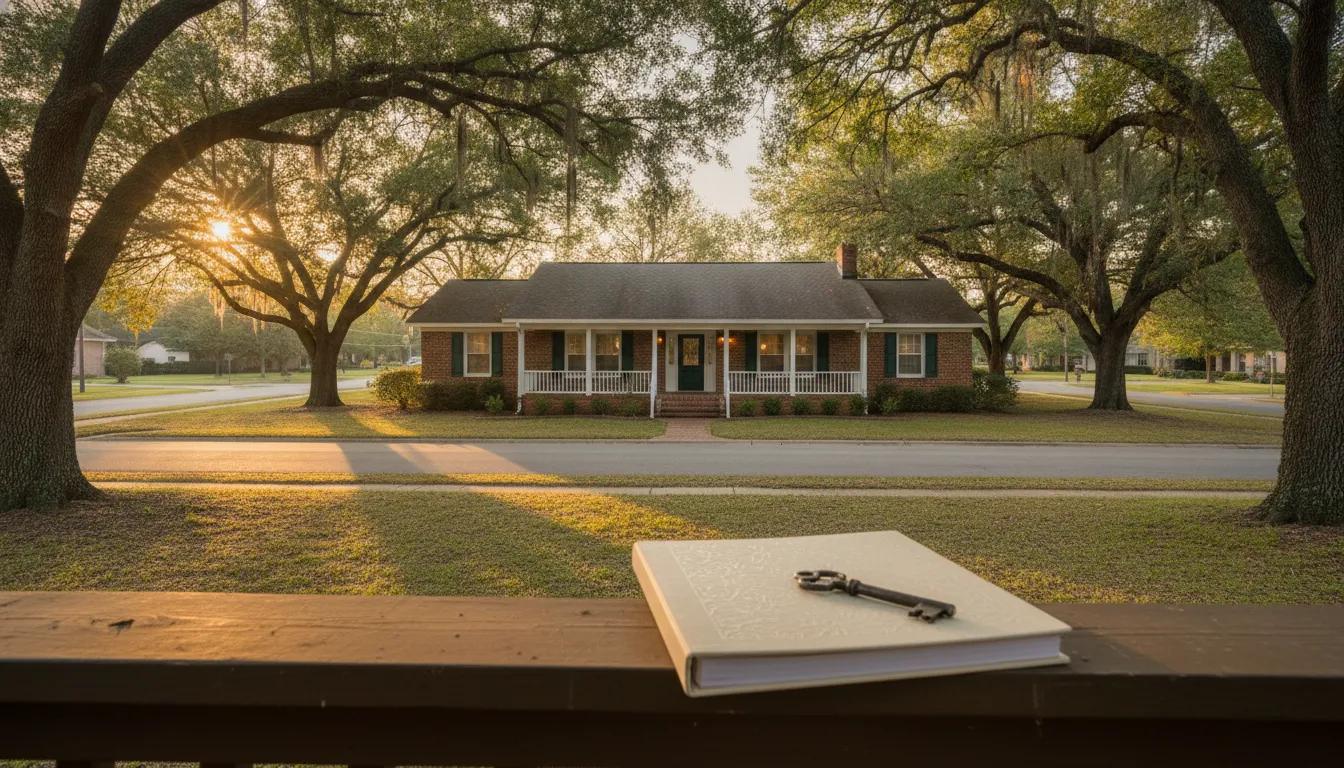
Bossier City home insurance for buyers is a set of questions, not a price you can guess from the listing. A homeowners quote, a flood decision, a wind deductible, and the cost to rebuild can change what a house actually costs after closing. Ask those questions before you write the offer, then let a licensed insurance professional price the property. L&N Associates does not sell insurance and does not quote premiums.
Start a buyer conversation with L&N Associates
What Should Bossier City Home Insurance for Buyers Cover?
A standard homeowners policy is meant to cover the house, your belongings, and certain liability if someone is hurt on the property, but only for perils the policy lists. It is not a promise that every loss is paid. Flood is the gap buyers in this market miss most often, because a normal homeowners policy does not cover flood damage.
The Louisiana Department of Insurance homeowners guide tells consumers to read what a policy covers before they rely on it. The National Flood Insurance Program says most homeowners and renters policies do not cover flood, so a separate flood policy is the product that does. In Bossier Parish, flat land and slow drainage put many properties in a Special Flood Hazard Area, and the southern part of the parish can see backwater from the Red River. The Bossier Parish Police Jury explains that flood insurance through the NFIP is available because the parish participates, and that a federally backed loan on a mapped high-risk property generally requires it.
Read the dwelling, other structures, personal property, loss of use, and liability parts as separate lines. Then ask what is excluded. Sewer backup, mold, and some water that enters at ground level are common arguments after a storm, and the policy language decides them.
Questions to ask about the base policy
- Which causes of loss does this form cover, and which are excluded?
- Is personal property covered for replacement cost or a lower actual-cash value?
- Does liability extend to a dog, a pool, or a trampoline if the house has one?
- Is sewer or drain backup included, or is it an add-on?
How Do Flood and Wind Change the Quote?
Flood and wind are separate problems, and buyers should price them as separate lines. Flood insurance is its own policy. Wind and hail usually sit inside the homeowners policy, often with a deductible larger than the one for a kitchen fire or a theft.
Do not treat a Zone X label as a reason to skip the conversation. The parish notes that flooding can happen when saturated ground and heavy rain meet slow drainage, including away from the river. FEMA's Flood Map Service Center, at msc.fema.gov, is the place to look up the current map panel. A zone can change, so ask the agent to pull the panel for that address rather than relying on a screenshot in the listing.
NFIP building coverage and contents coverage are priced apart. A policy on the structure does not automatically replace furniture and clothes. FloodSmart also says an NFIP policy typically takes 30 days to go into effect unless a lender requirement or a map change creates an exception. If closing is soon, that waiting period belongs on your calendar.
Wind and named-storm deductibles
Ask whether wind or hail uses a dollar deductible or a percentage of the dwelling limit. A 2 percent wind deductible on a $250,000 dwelling limit is $5,000 before the insurer pays for wind damage. That example is math, not a local premium. Also ask whether a named-storm or hurricane deductible replaces the normal wind deductible when a storm is named, and whether it applies once per season or once per event.
Which Deductible Will You Actually Pay?
The premium is only half of the cost, because the deductible is the part you pay before the insurer does. Many Louisiana policies use more than one deductible, so the small number on the quote can hide a much larger wind number.
| Deductible type | What to ask | Why it matters before you offer |
|---|---|---|
| All other perils | Is it a flat dollar amount, and does it apply to fire, theft, and sudden water? | This is the number people remember. It may not apply to wind. |
| Wind or hail | Is it a dollar amount or a percentage of the dwelling limit? | A percentage deductible can be several thousand dollars on an ordinary Bossier City house. |
| Named storm or hurricane | Does it replace the wind deductible, and how often can it apply? | One Gulf storm can trigger a larger out-of-pocket amount than a regular wind claim. |
| Flood policy | What are the building and contents deductibles on the separate flood policy? | Flood deductibles are not the homeowners deductibles. Budget them on their own. |
Ask for the deductible in dollars for the dwelling limit the agent is using. A percentage is hard to compare until someone does that math on the house you want.
What Does Claims History Tell You?
Claims history is about the house and, sometimes, about you. Insurers can review prior claims on the property through industry loss databases. A roof claim, a water claim, or a string of small claims can raise the premium, limit options, or make an insurer decline the risk. None of that is visible in the listing photos.
Ask the seller, through your agent, for any claim history they can share, and ask your insurance professional to check what their market can see. You want three facts:
- What was claimed, and in what year?
- Was the damage repaired, and is there an invoice or permit?
- Will any insurer you can use decline the house or add a roof exclusion?
A prior claim is not an automatic reason to walk away. A roof that was replaced and documented can be easier to insure than a roof that is original and unmarked. Pair this conversation with a Bossier City home inspection. The inspection describes condition. The claim file describes what an insurer already paid for. They answer different questions.
Is the Dwelling Limit a Real Replacement Cost?
The dwelling limit should track what it costs to rebuild the house, not what you pay the seller and not the taxable value. Sale price includes land. Insurance does not rebuild the dirt under the slab. If the limit is too low, a total loss can leave you short even when the policy says replacement cost.
Ask the agent what rebuild cost they used, and what assumptions sit inside it. Local labor, roof shape, foundation type, and ordinance work can move the number. Then ask three follow-ups.
- Is the dwelling written at replacement cost or actual cash value?
- Does an extended replacement-cost endorsement raise the limit by a set percent after a total loss?
- Are matching roof materials and building-code upgrades included or excluded?
If the house appraises below the contract price, that gap is a loan problem, not an insurance limit. The Bossier City appraisal process for buyers explains that step. Keep the insurance rebuild number on its own page of your notes so the two figures do not get mixed.
When Should You Ask During the Purchase?
Insurance questions belong next to the inspection and the loan, not the night before closing. A useful order for a Bossier City purchase looks like this.
- When you tour, note the roof age, HVAC age, flood vents, and any finished room below grade.
- Before you write, ask a licensed agent for a preliminary homeowners quote and a flood quote on that address.
- During inspection, compare roof, plumbing, and drainage notes with anything the claim history already flagged.
- Before you remove contingencies, confirm deductibles in dollars and whether the insurer will bind coverage.
- Before closing, ask your lender which proof of insurance it needs and whether flood insurance is required for the loan.
What Should You Hand the Insurance Professional?
A useful quote starts with the property, not a guess about the neighborhood. Send the licensed agent the facts you already have from the listing, the seller, and the inspection, and ask which of those facts changed the price.
Build a short packet before you ask for numbers:
- Street address, year built, and square footage from the listing or the appraisal.
- Roof age and roof material, plus any invoice if the seller already replaced it.
- Updates to plumbing, electrical, and HVAC, with the year if the seller knows it.
- Whether any finished room sits below grade, and whether the house has flood vents.
- A flood-zone printout from the current FEMA map panel, not an old remark in the listing.
- Any claim the seller will disclose, with the year and whether the repair was finished.
- The contract price and the closing date, so the agent can see the waiting period.
Ask the agent to come back with four figures in dollars: the dwelling limit, the all-other-perils deductible, the wind or named-storm deductible, and the flood building deductible. If a figure is a percentage, ask them to convert it before you compare one house with another.
L&N Associates can help you collect those property facts while you are looking at Bossier City real estate. We still will not tell you which policy to buy. A licensed insurance professional has to match the form, the deductible, and the limit to that house.
Lender rules are not the same as your risk. A loan that does not require flood insurance does not mean flood is unlikely. It means that lender is not requiring the policy. If you are still comparing houses, the Bossier City listings guide is the place to narrow the search. Insurance questions come after you have a specific address.
Financing has its own track. A mortgage pre-approval in Bossier City tells you what you can borrow. It does not tell you what the insurer will charge to cover the house. First-time buyers who want the wider sequence can use the first-time homebuyer guide for Bossier City, then come back here for the coverage questions that guide does not own.
Lease-to-own buyers should ask a different version of the same questions. Who insures the structure during the lease, who insures your belongings, and what proof will matter when the purchase option is exercised? Current lease-to-own fit depends on availability. Start with how L&N Associates handles lease-to-own if that is the path you are comparing, and still take the coverage questions to a licensed insurance professional.
Call L&N Associates at (318) 656-1030
Frequently Asked Questions
Does homeowners insurance in Bossier City include flood?
No. A standard homeowners policy does not cover flood damage. Flood insurance is a separate policy, available through the National Flood Insurance Program and through private insurers. Ask for both a homeowners quote and a flood quote on the address you want to buy.
Do I have to buy flood insurance outside a high-risk zone?
A federally backed mortgage on a property in a mapped Special Flood Hazard Area generally requires flood insurance. Outside those zones, the lender may not require it. You can still buy it. Bossier Parish's flat ground and heavy rain are reasons to ask, even when the map does not force the purchase.
Can the seller's premium predict mine?
No. The seller's premium reflects their claims, their credit-related insurance factors where allowed, their deductible choices, and the limit they carried. Your quote can be higher or lower. Use their declarations page only as a clue to deductibles and prior limits, not as your price.
Who should answer coverage questions?
A licensed insurance agent or the insurer should answer coverage questions. L&N Associates can help you compare Bossier City houses and time those questions inside the purchase. We do not bind policies, promise that a claim will be paid, or quote a premium.
Bring the Address, Then Call a Licensed Agent
Pick the house with a local team that already works Bossier Parish, Caddo Parish, and Shreveport-Bossier City. Then hand that address to a licensed insurance professional and ask about homeowners coverage, flood, wind deductibles, claims history, and replacement cost. L&N Associates will talk through the buying path, and the insurer has to price the risk.
Call (318) 656-1030 or send a note through the L&N Associates contact page. Tell us the area and the timing. We will help you sort the next real estate step, without a coverage promise and without a premium quote.